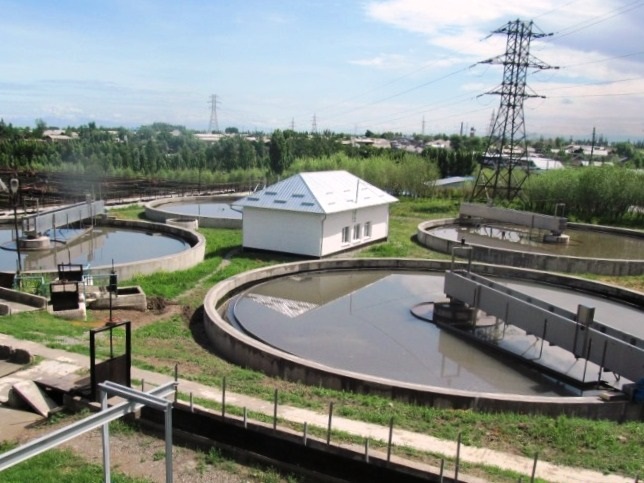
For more than 20 years after the independence of Kyrgyzstan, basic infrastructure has been continuously deteriorating due to lack of preventive maintenance and reduced capital investments. The waste water treatment plant in Osh was designed in 1969 based on a conventional activated sludge process. The treatment efficiency of the WWTP was insufficient, because the mechanical treatment was only partially in operation condition and the activated sludge treatment was not operated properly. With the rehabilitation of the mechanical treatment the effluent efficiency is improved and the pre-condition for the rehabilitation of the biological treatment is set.
Scope
The project consists of the rehabilitation and modernization of a wastewater treatment plant with a capacity of 80’000 m³/day, including the supply and installation of electro-mechanical equipment and extensive civil works.
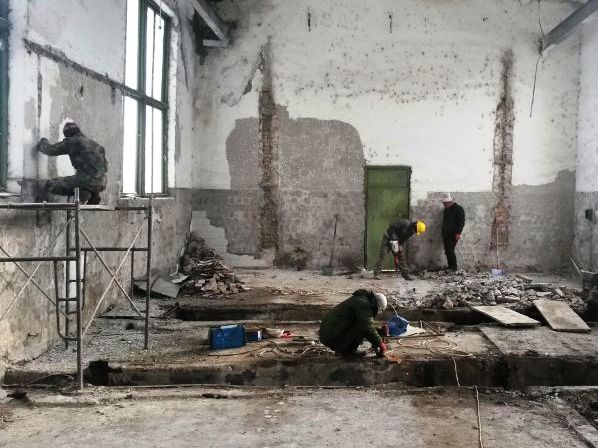
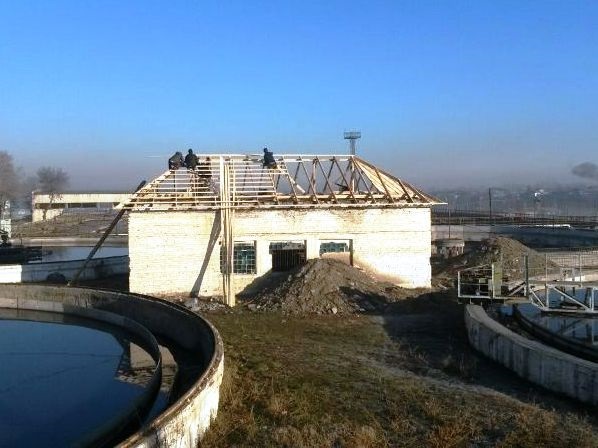
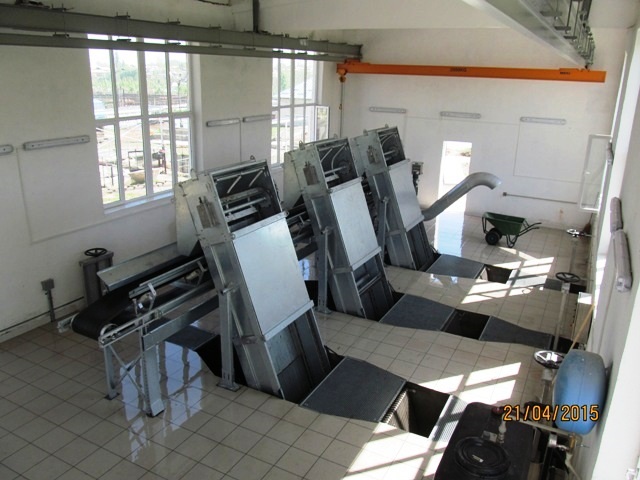
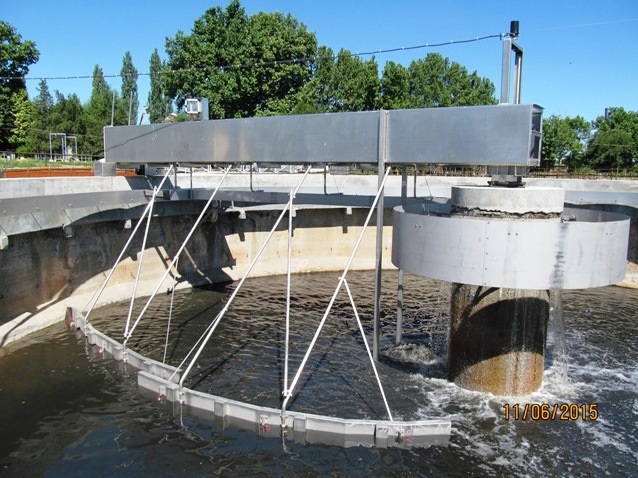
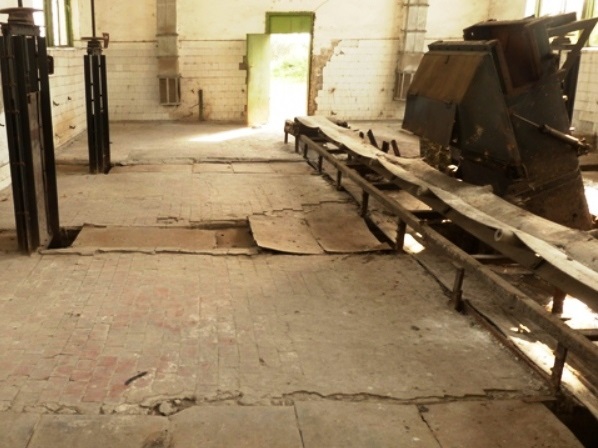
The works included the installation of fine screens and inlet flow measurement, rehabilitation of the 4 primary clarifiers with new scraper systems, and refurbishment of the screening building with new screenings containers, crane system, structural works, and electrical upgrades.
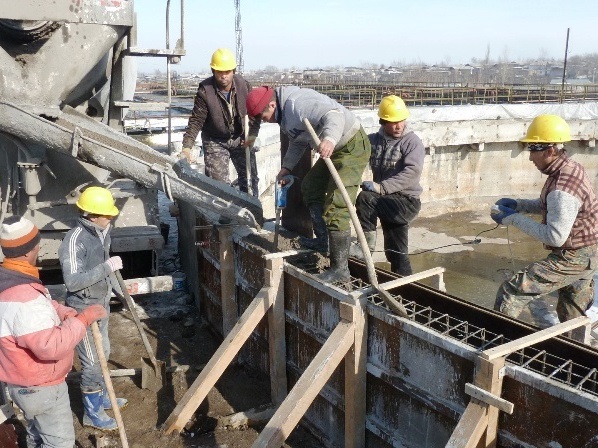
Additional works covered the rehabilitation of primary sludge pumping facilities and pumping stations, emergency rehabilitation of sand traps, and the execution of all required civil works and connections to ensure full integration with the existing treatment system.
Phase II included the installation of four return sludge pumps, 4 x 250 kW blowers with frequency control, based on oxygen demand, and rotating suction vacuum scrapers for secondary clarifiers (Ø 28 m).
A new chlorination system with three independent lines (10 kg active chlorine/h each) and three contact tanks with sedimentation was implemented, including automatic dosing and monitoring of chlorine storage.
The plant was fully automated with flow, pressure, and temperature sensors, PLCs, and a SCADA system.
All works were executed under continuous plant operation.