


Syrdarya Water Supply Project
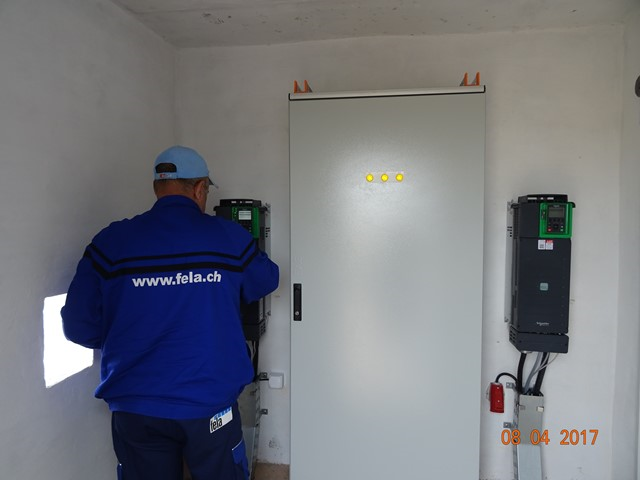
Syrdarya Water Supply Project Period: June 2016 – February 2018 Location: Syrdarya, Beshbulok, Uzbekistan Task: Rehabilitation of Beshbulok Pumping Station and its Wellfield Syrdarya Water Supply Project Officially, 62% of the rural population in Uzbekistan has access to safe drinking water and less than 30% to sewerage systems; the needs are still significant. The drinking water infrastructure was mainly built during the soviet times and is in bad condition. For the Bukhara and Samarkand Water Supply Project, launched in 2003, FELA Planungs AG successfully rehabilitated key elements of the water supply system (e.g. pumping stations, water metering, network rehabilitation). The rehabilitation of the water supply system in Syrdarya province will provide safe drinking water to urban and rural residents and provide tools for the management of the water resources. Pumping Station: Installation of new Pumping Station incl. connection to existing pressure and suction pipes 4 split case pumps (each 1’500 m3/h) and 2 Surge Vessels (each 22.5 m3) 2 Surge Vessels (V=22.5m3) Stainless Steel Piping (DN400 to DN1200) incl. Valves, Flow Meter etc. New Electrolysis Chlorination Station Groundwater Wells: Drilling and construction of 4 new wells Regeneration and de-silting of 24 exsiting wells New submersible pumps (180m3/h), riser pipes (DN150) and construction of well boxes for all 28 wells New Valve Chambers in Manifold between Wells and Reservoir (DN400 and DN800) Electrical Installation: New high voltage distribution 35kV and connection to transmission lines 2 new 35 kV/6 kV, 4 MVA oil-immersed transformers and medium voltage distribution 6kV 2 new Transformer 6kV/400V for Pumping Station and 14 Transformer 6kV/400V for wells Automation and Control: New SCADA system for Well field and Pumping Station Communication with Reservoir Severnaja Principal: Financed By: Consulatant:
Namangan Water Project – NWP-12
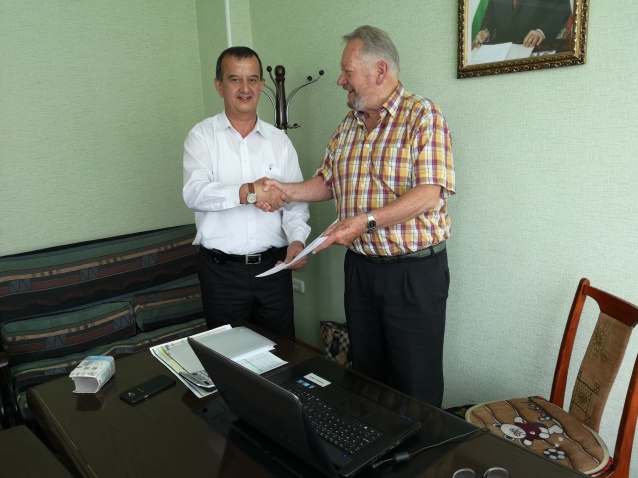
Namangan Water Project – NWP-12 Hypochlorite plant at Kyzyl-Ravat water intake Period: November 2022 – May 2024 Location: Namangan, Republic of Uzbekistan Task: FELA Planungs AG was responsible for the design, supply, and installation of a new sodium hypochlorite disinfection system at the Kyzyl Ravat Water Treatment Plant, including reconstruction of the existing chlorination building, integration of electrical and control systems, and commissioning of the plant. Namangan Water Project – NWP-12 Hypochlorite plant at Kyzyl-Ravat water intake Project Site The Kyzyl Ravat Water Treatment Plant is located in eastern Uzbekistan in the Namangan Region, between the city of Namangan (population over 1 million) and the city of Andijan (population approximately 600,000). The plant is situated in the city of Uchkurgan (Uchqo’rg’on), which has a population of around 50,000 and lies directly on the border with Kyrgyzstan. Project Goal Previously, the disinfection of 3,000–4,000 m³/h of drinking water was carried out using chlorine gas stored in large drums. The installation dated back to the Soviet era and had reached the end of its operational lifetime. The system was replaced with two automatic sodium hypochlorite production lines producing a solution with 0.6–0.8% free chlorine. Each line has a production capacity of 7 kg/h, resulting in a total output of 378 kg of free chlorine per day. The sodium hypochlorite is produced from locally available salt (NaCl) through electrolysis. Services Provided by FELA · Preparation of the complete project documentation in accordance with local regulations required for the building permit · Reconstruction of the existing chlorination building, including interior and exterior works · Installation of a new roof, windows, gates, and doors · Construction of an operator control room with SCADA system, a social room with kitchen, and staff facilities including wardrobes, toilets, and showers · Installation of new electrical connections to the existing transformer stations and internal power distribution, including lighting and connections to the production lines · Installation of new sanitary piping and equipment · Installation of new epoxy flooring · Supply and installation of two fully independent sodium hypochlorite production lines, each with a capacity of 168 kg of active chlorine per day (7 kg/h) · Commissioning of the system and training of local operators in operation and maintenance The building permit, including the required expert approvals, was obtained in August 2023. The approval process included new legal requirements for additional energy efficiency measures, including the installation of a photovoltaic system. The plant has since been successfully completed and commissioned by end of May 2024. Client: Financed By: Consultant: