


Water Meter Project Namangan
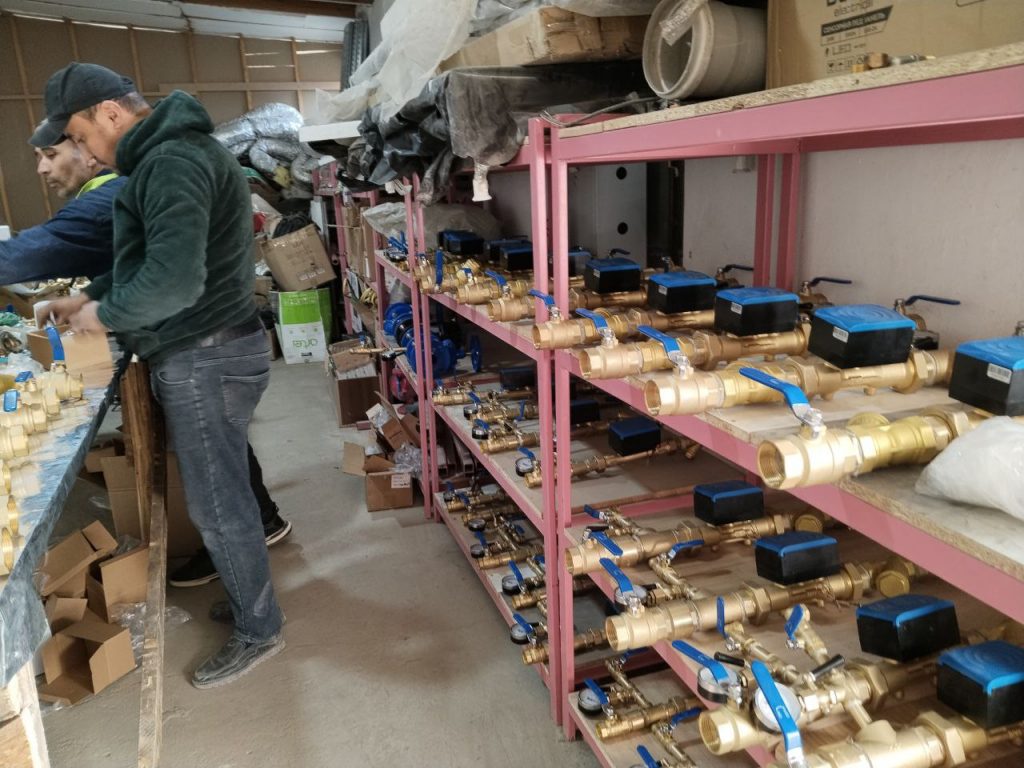
Water Meter Project Namangan City, Uzbekistan Period: December 2024 – present Location: City of Namangan, Uzbekistan Task: FELA Planungs AG is responsible for the detailed design, supply, and installation of water metering systems in Namangan City and surrounding districts. The task includes the installation of building water meters for multi-family houses, process flow meters within the distribution network, construction of meter chambers and technical installations, and integration of all equipment into a centralized monitoring system for automated data collection and improved water management. Water Meter Project – Namangan City, Uzbekistan Contract No. NWP-9.1/NWP-9.2/NRWWP-07 The project supports the modernization of water supply infrastructure in Uzbekistan through the installation of advanced water metering systems. It is implemented by Uzsuvtaminot JSC on behalf of the Republic of Uzbekistan and financed by the European Bank for Reconstruction and Development (EBRD). FELA Planungs AG is responsible for Lot 1 and Lot 2 of the program, covering Namangan City and surrounding districts. Lot 1 – Water Metering for Multi-Family Buildings Lot 1 includes the installation of 844 whole-building water metering units for multi-family houses in Namangan City. The scope covers detailed design, installation of metering cabinets, water meters, valves and communication equipment, as well as integration into the central monitoring system. A LoRaWAN-based communication system with 23 radio gateways enables automated data collection and transmission. Lot 2 – Process Water Flow Measurement Lot 2 focuses on monitoring water flows within the distribution network. A total of 103 process flow meters are installed in Namangan City and in the districts of Chust, Pap and Namangan. The works include the construction of chambers and manholes, installation of flow meters and telemetry equipment, and integration into the monitoring system. Project Scope · Installation of 844 building water meters (DN 25–DN 65) with LoRaWAN communication · Installation of 103 process and bulk flow meters (DN 80–DN 1400) · Construction of 31 chambers and 72 manholes for meter installations · Installation of 75 cabins with communication equipment, modem and UPS · Solar power supply systems for 11 remote cabins. · Automated data transmission to the central SCADA monitoring system The project improves the monitoring of water distribution, increases operational transparency, and contributes to reducing water losses in the regional water supply system. Client: Financed By: Consultant:
Water Supply in South East Kosovo (WSSEK)
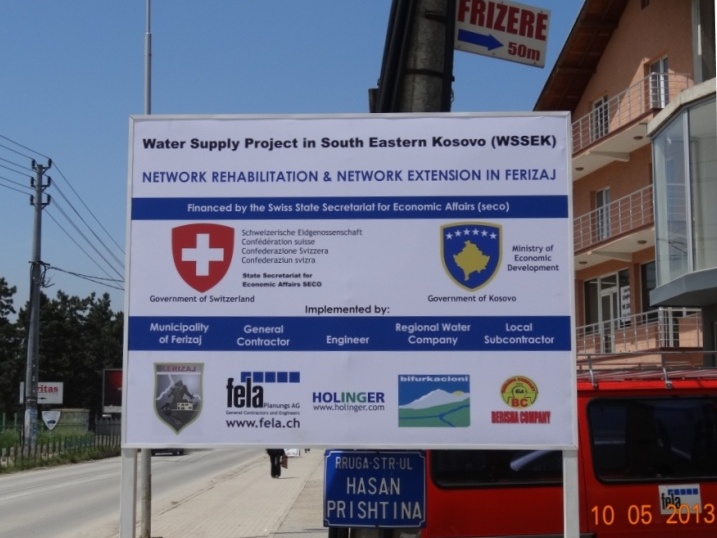
Water Supply in South East Kosovo (WSSEK) Period: 2012 – 2014 Location: Gjilan and Ferizaj, Kosovo Task: Construction of a new drinking water reservoir (3’000 m3) Popovica in Gjilan and drinking water network rehabilitation and extension in Ferizaj. Water Supply in South East Kosovo (WSSEK) High-quality water and sanitation services and improved governance of water and energy resources contribute to the living condition of the population, higher resilience to climate change and an improved state of the environment.The former reservoir on Popovica Hill was dilapidated and of minimal capacity (500 m3) to accommodate the functions of a balancing reservoir in the water supply system of Gjilan. The new reservoir with a capacity of 3’000m3 increases the resistance of the water supply system.The drinking water supply and the water quality in Ferizaj was improved in two central neighborhoods through network rehabilitation and network extension. The methods of District Network Management were applied to attain sustainable results. Gjilan – Reservoir Popovica Turn-key construction of reservoir with 3’000 m3 Mechanical and electro technical equipment Automation and Telecontrol System and Process Instrumentation 3 connecting pipes to distribution network (PE and Steel) Ferizaj Main pipelines and house connections for drinking water network in Ferizaj Installation of 2’500 water meters Equipment for remote reading of water meters 14.2 km of HDPE/RC pipes from OD32 to OD280 PN10 Client: RWC Bifurkacioni, Ferizaj Financed By: Consultant:
Water Meter Project Bishkek, Kyrgyzstan
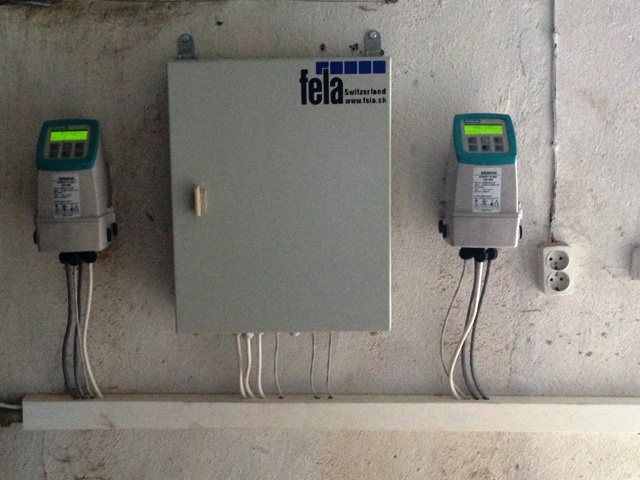
Water Meter Project Bishkek, Kyrgyzstan Period: March 2014 – September 2015 Location: Bishkek, Kyrgyzstan Task: Supply of ultrasonic and electromagnetic flow water meters for installation in well-fields. Water Meter Project Bishkek, Kyrgyzstan Over 20 years after independence of Kyrgyzstan, basic infrastructure has been continuously deteriorating because of inefficient management, lack of preventive maintenance and reduced capital investments. In urban areas as Bishkek the infrastructure, especially water supply, is under additional strain due to internal migration from rural areas and at a risk of collapsing. The installation of water meters and SCADA system is strengthening municipal management capacities to ensure the improved quality of basic infrastructure and service delivery. Supply and Installation: Ultrasonic clamp-on flow meters fo the installation on steel pipes Electromagnetic flow meters fo the installation in steel pipes Civil Works: Construction of weather proof cabines for the installation of flow meter transmitter Automation and Control: SCADA system including equipment, devices and accessories for data transfer and registration Additional Service: Training for Installation, Operation and Maintenance of the watermeters Training for the SCADA System Client: PED Bishkekvodokanal Financed By: Consultant:
Water Meter Project Osh, Kyrgyzstan
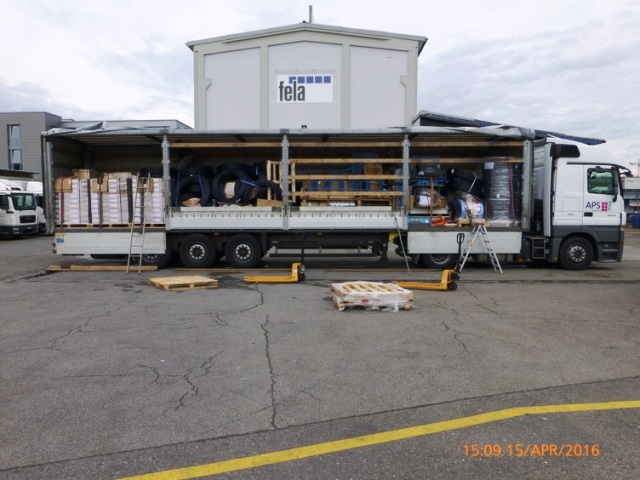
Water Meter Project Osh, Kyrgyzstan Period: September 2015 – March 2017 Location: Turan, Osh, Kyrgyzstan Task: Water metering in the city of Osh in the framework of the Osh Water Rehabilitation Project (OWRP). Supply and installation of equipment and related civil works. Water Meter Project Osh, Kyrgyzstan Over 20 years after independence of Kyrgyzstan, basic infrastructure has been continuously deteriorating because of inefficient management, lack of preventive maintenance and reduced capital investments. In urban areas as Osh the infrastructure, especially water supply, is under additional strain due to internal migration from rural areas. Installation of water meters helps foster the efficient, transparent and accountable management and delivery of public services at local levels and leads to public sensitization on drinking water and sanitation issues. Supply and Installation: 3’360 manholes equipped with domestic water meters 1 complete manholes equipped with ultrasonic bulk flow water meters 2 complete manholes equipped with Woltman-type bulk flow water meters Automation and Control: Complete remote reading system for all water meters Data integration of remote reading system into existing billing system/software Additional Services: Training for operation and maintenance of the equipment and software Civil and electrical engineering Client: Osh Municipal Enterprise “Oshgorvodokanal” Financed By: Consultant:
DWSP Delcevo
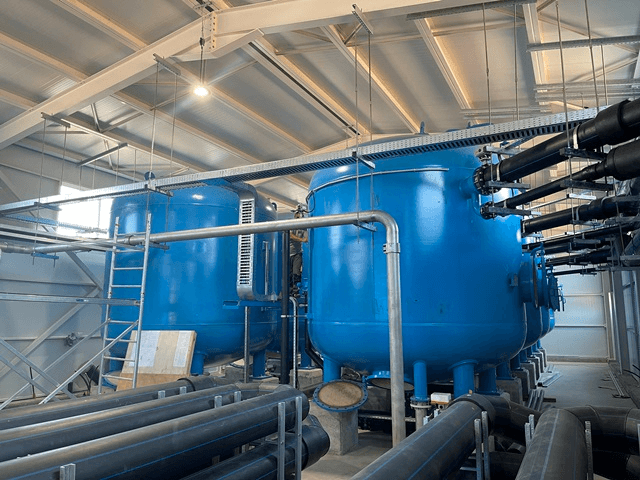
Delcevo Water Supply Project (DWSP) Period: April 2021 – December 2024 Location: City of Delcevo, North Macedonia Task: Design and implementation of a resilient water supply system for Delčevo, combining surface and groundwater sources. The project included the rehabilitation and construction of hydraulic structures, wells, reservoirs, and a water treatment plant, as well as the installation of pumping, disinfection, and monitoring systems. Integration into a central SCADA system and a 250 kWp photovoltaic plant. Delcevo Water Supply Project (DWSP) The Delčevo Water Supply Project (DWSP) in North Macedonia improves the long-term drinking water supply for the town of Delčevo and the surrounding communities. It is designed to meet a future demand of around 16’500 population equivalents and combines surface water from the Loshana Dam with groundwater sources to create a reliable supply system. The project includes new and upgraded hydraulic structures, groundwater well fields, reservoirs, transmission pipelines, a modern water treatment plant, and a 250 kWp photovoltaic power plant. With automated monitoring and connection to a central SCADA system, the new infrastructure supports efficient operation, better water quality, and a more secure water supply for the region. Project Scope Design & Planning Detailed design, including expert assessments and building permit documentation Water Intake & Regulation (A1–A2) Rehabilitation of the existing pressure break chamber with flow measurement, automated valves, and lake level monitoring, powered by solar energy Construction of a new downstream pressure break chamber with integrated valve chamber and water tank, powered by a hydro-generator with battery storage Water Treatment (A3) Modern drinking water treatment plant for raw water from the mountain lake Loshana Four multimedia pressure filters and four activated carbon filters with a diameter of 3.5 m and height 4.8 m and a working pressure of 10 bars. Coagulation and flocculation with static mixers and flow-proportional dosing Disinfection using on-site generated chlorine dioxide with flow-proportional dosing Groundwater Development (B1–B2) Rehabilitation of existing wells with booster pumping stations Drilling and development of two new groundwater wells Installation of pumps, level and flow sensors, and UV disinfection Full integration into the central SCADA system via 3G/4G communication Storage & Distribution (C4–C5) Construction of a new reservoir with two 400 m³ chambers Rehabilitation of an existing reservoir Installation of level and flow monitoring, as well as electrically actuated control valves Integration into SCADA for remote monitoring and control via 3G/4G data modem Photovoltaic Power Plant (D) 250 kWp photovoltaic system with inverters, smart PV controller, and weather station Automated monitoring and control via central SCADA system Automation Central SCADA System that connects all above stations. Client: Financed By: Consultant:
Syrdarya Water Supply Project
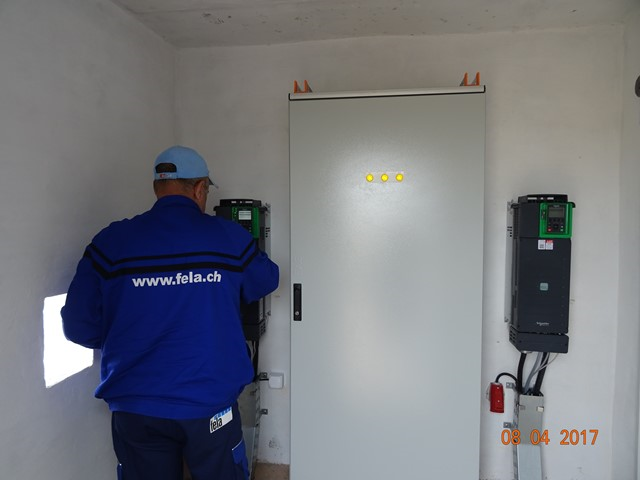
Syrdarya Water Supply Project Period: June 2016 – February 2018 Location: Syrdarya, Beshbulok, Uzbekistan Task: Rehabilitation of Beshbulok Pumping Station and its Wellfield Syrdarya Water Supply Project Officially, 62% of the rural population in Uzbekistan has access to safe drinking water and less than 30% to sewerage systems; the needs are still significant. The drinking water infrastructure was mainly built during the soviet times and is in bad condition. For the Bukhara and Samarkand Water Supply Project, launched in 2003, FELA Planungs AG successfully rehabilitated key elements of the water supply system (e.g. pumping stations, water metering, network rehabilitation). The rehabilitation of the water supply system in Syrdarya province will provide safe drinking water to urban and rural residents and provide tools for the management of the water resources. Pumping Station: Installation of new Pumping Station incl. connection to existing pressure and suction pipes 4 split case pumps (each 1’500 m3/h) and 2 Surge Vessels (each 22.5 m3) 2 Surge Vessels (V=22.5m3) Stainless Steel Piping (DN400 to DN1200) incl. Valves, Flow Meter etc. New Electrolysis Chlorination Station Groundwater Wells: Drilling and construction of 4 new wells Regeneration and de-silting of 24 exsiting wells New submersible pumps (180m3/h), riser pipes (DN150) and construction of well boxes for all 28 wells New Valve Chambers in Manifold between Wells and Reservoir (DN400 and DN800) Electrical Installation: New high voltage distribution 35kV and connection to transmission lines 2 new 35 kV/6 kV, 4 MVA oil-immersed transformers and medium voltage distribution 6kV 2 new Transformer 6kV/400V for Pumping Station and 14 Transformer 6kV/400V for wells Automation and Control: New SCADA system for Well field and Pumping Station Communication with Reservoir Severnaja Client: Financed By: Consultant:
NWP-12 Hypochlorite plant at Kyzyl-Ravat water intake
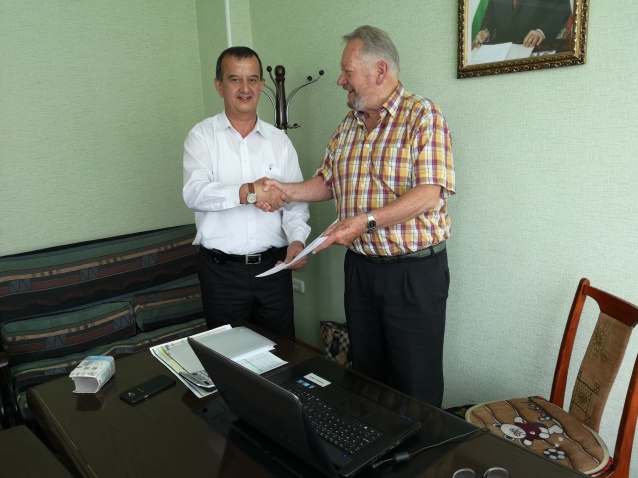
Namangan Water Project – NWP-12 Hypochlorite plant at Kyzyl-Ravat water intake Period: November 2022 – May 2024 Location: Namangan, Republic of Uzbekistan Task: FELA Planungs AG was responsible for the design, supply, and installation of a new sodium hypochlorite disinfection system at the Kyzyl Ravat Water Treatment Plant, including reconstruction of the existing chlorination building, integration of electrical and control systems, and commissioning of the plant. Namangan Water Project – NWP-12 Hypochlorite plant at Kyzyl-Ravat water intake Project Site The Kyzyl Ravat Water Treatment Plant is located in eastern Uzbekistan in the Namangan Region, between the city of Namangan (population over 1 million) and the city of Andijan (population approximately 600,000). The plant is situated in the city of Uchkurgan (Uchqo’rg’on), which has a population of around 50,000 and lies directly on the border with Kyrgyzstan. Project Goal Previously, the disinfection of 3,000–4,000 m³/h of drinking water was carried out using chlorine gas stored in large drums. The installation dated back to the Soviet era and had reached the end of its operational lifetime. The system was replaced with two automatic sodium hypochlorite production lines producing a solution with 0.6–0.8% free chlorine. Each line has a production capacity of 7 kg/h, resulting in a total output of 378 kg of free chlorine per day. The sodium hypochlorite is produced from locally available salt (NaCl) through electrolysis. Services Provided by FELA · Preparation of the complete project documentation in accordance with local regulations required for the building permit · Reconstruction of the existing chlorination building, including interior and exterior works · Installation of a new roof, windows, gates, and doors · Construction of an operator control room with SCADA system, a social room with kitchen, and staff facilities including wardrobes, toilets, and showers · Installation of new electrical connections to the existing transformer stations and internal power distribution, including lighting and connections to the production lines · Installation of new sanitary piping and equipment · Installation of new epoxy flooring · Supply and installation of two fully independent sodium hypochlorite production lines, each with a capacity of 168 kg of active chlorine per day (7 kg/h) · Commissioning of the system and training of local operators in operation and maintenance The building permit, including the required expert approvals, was obtained in August 2023. The approval process included new legal requirements for additional energy efficiency measures, including the installation of a photovoltaic system. The plant has since been successfully completed and commissioned by end of May 2024. Client: Financed By: Consultant: